MinnKota Remote Repository ↗

DIY RF remote · Minn Kota CoPilot · 433.92 MHz

A replacement remote
for a ~2010 Minn Kota trolling motor.

A DIY replacement RF remote for a ~2010 Minn Kota trolling motor with the CoPilot (433.92 MHz) wireless system. It uses a XIAO ESP32-S3 and a CC1101 radio, runs on 3× AAA batteries, and lives in a 3D-printed case with strap loops.

brain XIAO ESP32-S3 radio CC1101 · 433.92 MHz power 3× AAA → MCP1700 3.3 V case PETG or ASA sleep ~20 µA buttons 6×6 mm tactile ×5
01

Functions

five buttons, one fixed 24-bit remote ID
   [ − ]       [ + ]        speed
[ ◁ ]   [ ⏻ On/Off ]   [ ▷ ]  steering + large centre toggle
  • ⏻ On/OffToggle. Sends once per press, never repeats while held, and takes priority if pressed with another button.
  • ◁ ▷Steering. Left / right; repeats while held.
  • − +Speed. Slower / faster; repeats while held.
02

Print-ready parts

renderings generated from the STL files with tools/render_previews.py
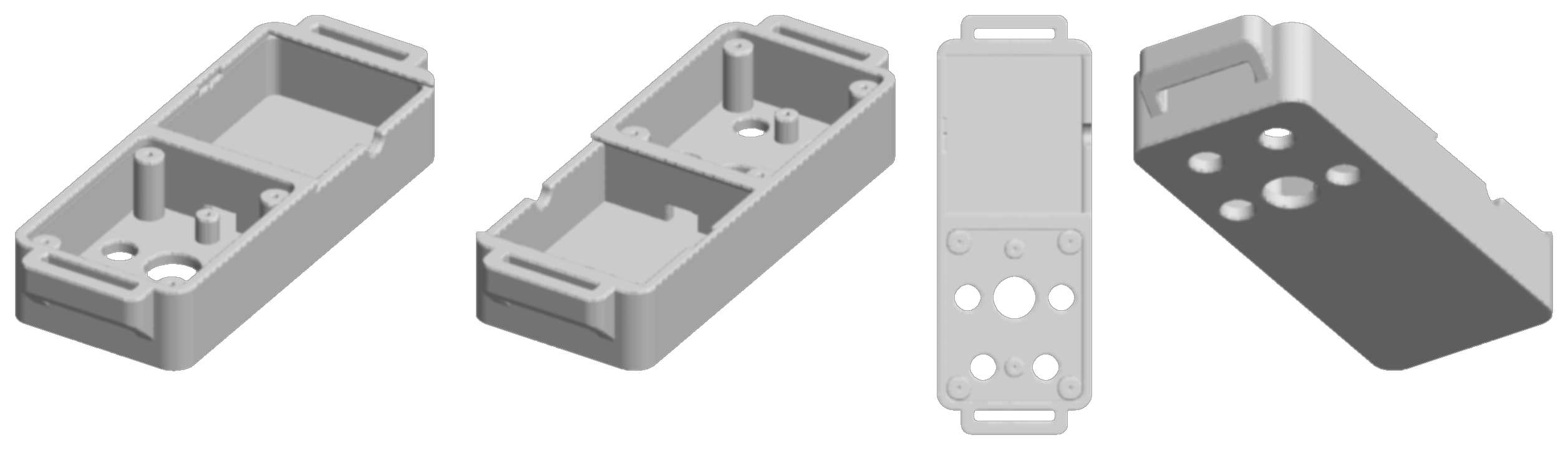
Four-view render of the 3D-printed remote shell: two isometric views, a top view and an underside view

remote_shell.stl

Main body, 44 × 106 × 19.5 mm (120 mm with strap loops). Exported top-face-down; no supports needed. Carries the five button holes, the divider wall between the battery and electronics bays, the four lid bosses and the two switch-board posts.
Bounding box
44.0 × 120.0 × 19.5 mm incl. strap loops
Mesh
943,600 tris
File
45.0 MiB
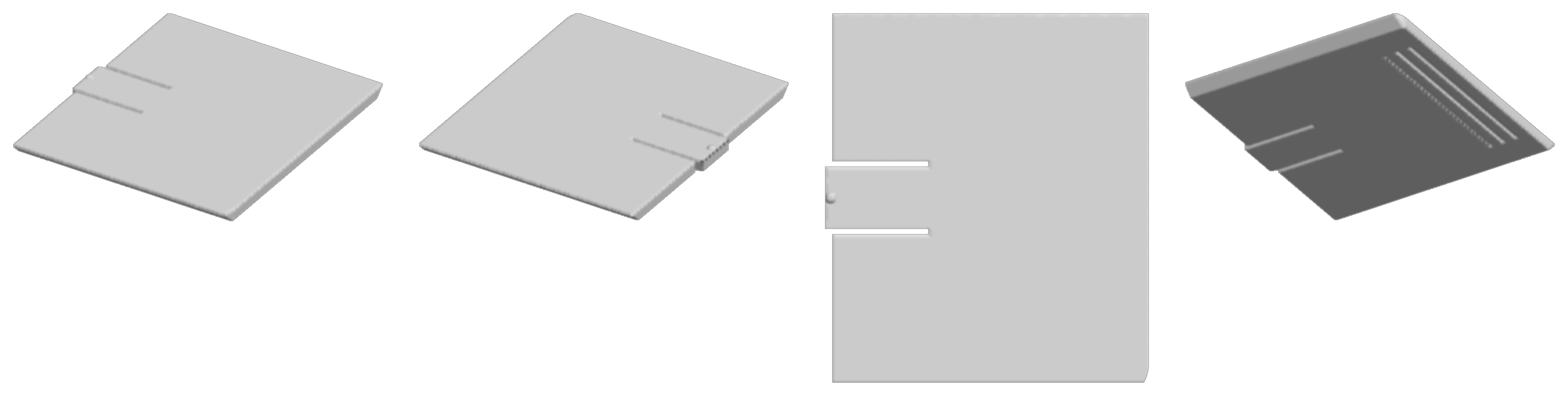
Four-view render of the 3D-printed dovetail battery door

remote_battery_door.stl

Dovetail slide-out door with snap detent. Print flat. Print this one first and check the fit — the case is an untested fit.

Bounding box
42.8 × 48.8 × 2.3 mm
Mesh
409,456 tris
File
19.5 MiB
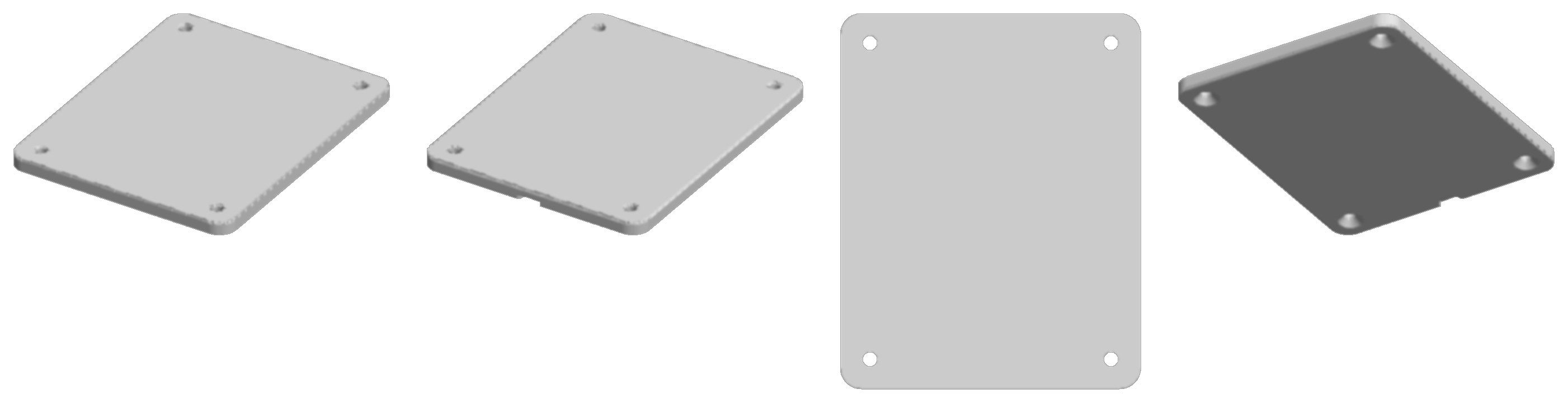
Four-view render of the 3D-printed electronics bay lid with four countersunk screw holes

remote_back_lid.stl

Electronics bay lid, 4× M2×6 countersunk self-tapping screws. Has a small pry notch for removal.

Bounding box
39.6 × 49.6 × 2.0 mm
Mesh
388,312 tris
File
18.5 MiB
Four-view render of the five 3D-printed button caps with engraved symbols

remote_button_caps.stl

5 caps on one plate: large 12.5 mm On/Off (power symbol), ◁ ▷ Left/Right, − + Slower/Faster. Symbols are engraved, so the caps print top-face-up with no supports.

Bounding box
40.3 × 24.0 × 5.5 mm
Mesh
706,464 tris
File
33.7 MiB

Each link opens the STL on GitHub, where the file renders in the built-in 3D viewer and can be downloaded from the same page. The two largest parts (45.0 and 33.7 MiB) are above Cloudflare Pages’ 25 MiB per-asset limit, so the files are served from the repository rather than from this site.

03

How it works

capture the original, clone it, print the case

Capture the original remote’s packets

Record each button with an RTL-SDR and decode it into bits and pulse timings — the full workflow is in docs/capture-guide.md.

Put the timings and codes into the sketch

Fill in firmware/MinnKotaRemote/MinnKotaRemote.ino. The values in the sketch are placeholders until you capture your remote.

Print, wire, flash, test

Print the case, wire the buttons and CC1101, flash the XIAO ESP32-S3, and test with the prop removed.

04

The 3D-printed case

four parts, one print bed’s worth of PETG
FileNotes
remote_shell.stl Main body, 44 × 106 × 19.5 mm (120 mm with strap loops). Exported top-face-down; no supports needed.
remote_battery_door.stl Dovetail slide-out door with snap detent. Print flat.
remote_back_lid.stl Electronics bay lid, 4× M2×6 countersunk self-tapping screws.
remote_button_caps.stl 5 caps: large 12.5 mm On/Off (power symbol), ◁ ▷ Left/Right, − + Slower/Faster. Symbols are engraved.

Print & assembly notes

  • Material: PETG or ASA.
  • Battery bay fits an open 3× AAA holder up to about 40 × 50 × 14 mm, glued to the inside of the top.
  • Strap loops fit straps up to 22–24 mm wide.
  • Switches: 6×6 mm tactile, 5 mm overall height, on perfboard screwed to two posts (M2×4).
  • Not waterproof.
  • Untested fit: print the battery door first and check it.

Regenerating the STLs

Requires Python 3 with numpy and scikit-image. All dimensions are parameters at the top of the script.

pip install numpy scikit-image
python hardware/src/make_remote.py hardware/stl

Preview sheets like the ones above:

python tools/render_previews.py
05

Wiring summary

100 kΩ pull-up to 3V3 on every button pin, button to GND
XIAO pinGPIOFunction
D0GPIO1On/Off
D1GPIO2Left
D2GPIO3Right
D3GPIO4Slower (−)
D4GPIO5Faster (+)
D5GPIO6CC1101 CSN
D7GPIO44CC1101 GDO0 (TX data)
D8 / D9 / D10GPIO7 / 8 / 9CC1101 SCK / MISO / MOSI
3V3—MCP1700-3302 output from 3× AAA

Leave D6 (GPIO43) unused — it carries boot messages. Deep-sleep current is roughly 20 µA, so battery shelf life is the limit; turn the batteries off (or remove them) while USB is plugged in.

06

Repository layout

hardware, firmware and the capture guide
hardware/
├── stl/               print-ready STL files
└── src/               make_remote.py (parametric generator), preview.py
firmware/
└── MinnKotaRemote/    Arduino sketch for the XIAO ESP32-S3 + CC1101
docs/
├── capture-guide.md   RTL-SDR capture → ESP32 clone
└── images/            shell.png, button_caps.png
tools/
└── render_previews.py this page's renderings
07

Safety

Test with the propeller removed or the motor out of the water.

Keep the original remote or foot pedal within reach. On/Off sends once per press (no repeat while held) and takes priority if pressed with another button.

Low-power 433 MHz remotes fall under FCC Part 15 — copying your own remote at similar power is fine; don’t add an amplifier.
